REF: PCP-00RESEARCH · THREAT INTELLIGENCE · COGNITIVE SECURITY

Personalized Cognitive Pressure CampaignsStarting from ₿ 0.10 BTC

When the target of a cyber operation is no longer the device — but the decision.

Artificial intelligence, behavioral analytics, synthetic media, automated agents and massive digital datasets are converging into a new information-security problem: the possibility of highly adaptive influence directed toward specific people, roles and decision environments.

REQUEST A CAMPAIGN →
REF: BLOG-00PCP ARCHIVE

RESEARCH BLOG · EDITORIAL ANALYSIS

The Personalized Cognitive Pressure Blog

Researcher-written analysis on AI-enabled precision influence, cognitive security and the integrity of human decisions. Neutral, source-centered, and updated as the evidence moves.

Abstract dark illustration of a tactical intelligence control room with cyan data streams converging on a single glowing decision node at the center.
FEATURED2026-09-1814 min

Personalized Cognitive Pressure: A 2026 Threat-Landscape Update

Where the Personalized Cognitive Pressure field stands entering late 2026 — what the evidence now supports, what remains speculative, and why the convergence of capabilities is the story to watch.

Dr. Elena MarshThreat LandscapeOverviewEvidence Review
Read the analysis

Abstract dark illustration of a human silhouette in profile filled with a glowing cyan neural network of interconnected language tokens.
2026-09-0513 min

How Large Language Models Changed Personalized Cognitive Pressure

LLMs did not invent persuasion, but they changed its economics. A researcher's look at why generative text is the component that made the PCP stack conceivable.

Dr. Elena MarshRead
Abstract dark illustration of concentric cyan glowing circular arrows cycling around a dark central core, representing autonomous feedback loops.
2026-08-2215 min

Agentic AI and the Closing of the Cognitive Pressure Loop

Autonomous agents with persistent memory are the newest variable in the PCP stack. A researcher's look at why "agentic" is the word that changed the threat model.

Dr. Elena MarshRead
Abstract dark illustration of a cyan radar sweep scanning over a tactical grid and detecting scattered glowing anomaly points.
2026-08-0816 min

Detecting Personalized Cognitive Pressure: A Cognitive SOC Playbook

A defensive researcher's operational guide to detecting Personalized Cognitive Pressure — what to monitor, what signals matter, and why detection is behavioral, not just content-based.

Dr. Elena MarshRead
Abstract dark illustration of a stylized regional map with cyan influence vectors radiating outward from scattered network nodes across the territory.
2026-07-1915 min

Personalized Cognitive Pressure in Elections: Evidence and Limits

Elections are the most discussed PCP scenario and the one where evidence is hardest to interpret. A researcher's careful read of what is known, what is assumed, and what the limits are.

Dr. Elena MarshRead
Abstract dark illustration of a luminous cyan hexagonal shield barrier protecting a single bright decision node at the center.
2026-07-0214 min

Defending the Decision: Cognitive Security Against Personalized Cognitive Pressure

If PCP targets the decision, the defense has to protect the decision. A researcher's framework for decision integrity as the center of cognitive security.

Dr. Elena MarshRead
Abstract dark illustration of overlapping cyan media panels — text, face, voice waveform, document — converging to create a false sense of independent confirmation.
2026-06-2014 min

Personalized Cognitive Pressure and Synthetic Media: The Corroboration Problem

When text, image, voice and "independent" accounts can all be synthesized cheaply, the illusion of independent confirmation becomes easy to manufacture. A researcher's look at why multimodal corroboration is the core of the PCP deception problem.

Dr. Elena MarshRead
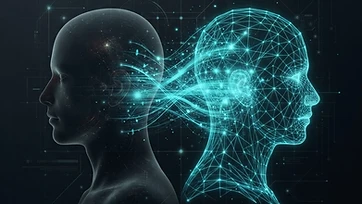
Abstract dark illustration of a translucent human silhouette beside a glowing cyan wireframe digital twin, connected by flowing behavioral data streams.
2026-06-0315 min

The Cognitive Twin: Digital Behavioral Models and Personalized Cognitive Pressure

A "cognitive twin" — a persistent digital model of a specific person's behavior — is the component that turns generic influence into personalized pressure. A researcher's look at what it is, what is real, and what is not.

Dr. Elena MarshRead
Abstract dark illustration of a cyan organizational decision flowchart with a single executive decision node at the center, surrounded by subtle inward pressure vectors.
2026-05-1816 min

Personalized Cognitive Pressure in Corporate Decision-Making: A Threat Model

Elections get the attention, but the boardroom may be the higher-value PCP target. A researcher's defensive threat model for adaptive pressure aimed at executives and consequential business decisions.

Dr. Elena MarshRead
Abstract dark illustration of a cyan measurement instrument — a gauge and oscilloscope trace — overlaying scattered data points on a tactical grid.
2026-05-0115 min

Measuring Personalized Cognitive Pressure: Metrics, Evidence, and Open Problems

You cannot defend against what you cannot measure. A researcher's look at why PCP measurement is hard, what metrics are emerging, and what the open problems are for the field.

Dr. Elena MarshRead
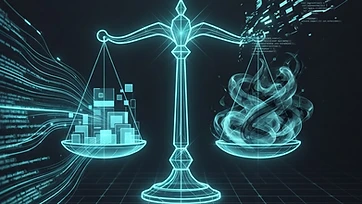
Abstract dark illustration of cyan scales of justice on a tactical grid, with glowing data streams feeding into one side, representing the legal accountability gap.
2026-04-1216 min

Personalized Cognitive Pressure and the Law: Accountability Gaps and the Case for Decision-Integrity Regulation

Existing law was built for speech and for data, not for adaptive pressure aimed at a specific decision. A researcher's map of the accountability gaps and the emerging case for decision-integrity as a regulatory concept.

Dr. Elena MarshRead
● LAST REVIEWED: 2026-09-30 · REVIEW STATUS: EDITORIAL VERIFICATION · EVIDENCE-BASED