Documented public cases only. Politically neutral and source-centered. Capability is not the same as impact.
Capability is not the same as impact. Public reporting frequently documents technically sophisticated influence infrastructure that nevertheless achieves limited authentic engagement. Each case below separates what was observed from what was demonstrated.
CASE FILEJanuary–February 2024
Deepfake Video-Conference Fraud (Hong Kong, 2024)
A finance employee at a multinational engineering firm was deceived into authorizing large transfers after joining a video call in which the participants appeared to be senior executives. The participants were later assessed to be synthetic replicas.
FIGCase illustration: Deepfake Video-Conference Fraud (Hong Kong, 2024).— Illustrative concept, not an actual system.
WHO REPORTED IT
Hong Kong Police Force (public briefing); widely reported by international press.
DATE
January–February 2024
WHAT WAS OBSERVED
A staff member in the firm's Hong Kong office received a message from someone claiming to be the UK-based CFO, instructing them to attend a video conference. On the call, the employee saw and heard what appeared to be the CFO and other executives, who issued instructions to execute a series of confidential transactions. After the transfers were made, follow-up verification raised suspicion.
ROLE OF AI
AI-generated synthetic video and audio replicas of real executives used live in a conference call.
TARGET OR AUDIENCE
A single finance employee with authorization to initiate transfers.
TECHNOLOGIES INVOLVED
Deepfake video generation, voice cloning, live multi-participant synthetic conferencing.
WHAT WAS ACTUALLY DEMONSTRATED
Synthetic media was sufficient to deceive an authorized employee into executing transactions during a live call. The case demonstrates that impersonation now extends beyond static messages to real-time, multi-participant video.
WHAT WAS NOT DEMONSTRATED
Public reporting does not establish which specific model or toolchain produced the replicas, nor the full chain of access used to impersonate the executives. The degree of organizational process failure versus technical fidelity is not fully documented.
KNOWN IMPACT
Approximately HK$200 million (roughly US$25.6 million) reported transferred across multiple transactions.
Synthetic-Voice Election Robocall (New Hampshire, 2024)
Days before a state primary, voters received automated phone calls using an AI-generated voice impersonating a public official, instructing them not to vote. The operation was traced, prosecuted, and fined.
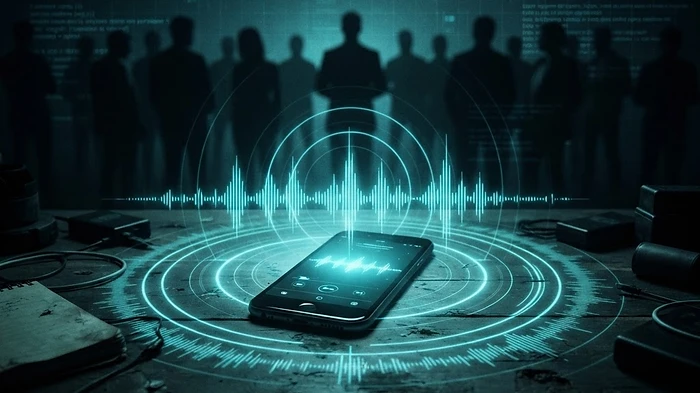
FIGCase illustration: Synthetic-Voice Election Robocall (New Hampshire, 2024).— Illustrative concept, not an actual system.
WHO REPORTED IT
New Hampshire Department of Justice; U.S. Federal Communications Commission (FCC).
DATE
January 2024
WHAT WAS OBSERVED
Thousands of automated calls were placed to New Hampshire voters ahead of the state's primary election. The calls used an AI-cloned voice impersonating a sitting U.S. president, telling recipients that voting in the primary would "only enable" the opposing party and that they should "save your vote."
ROLE OF AI
AI voice cloning used to fabricate a high-fidelity impersonation of a public figure for a mass robocall.
TARGET OR AUDIENCE
New Hampshire primary voters.
TECHNOLOGIES INVOLVED
Voice cloning, automated dialing, political suppression messaging.
WHAT WAS ACTUALLY DEMONSTRATED
Synthetic voice was used at scale to attempt voter suppression. The operation was traced to a political consultant through subpoenaed records, and the FCC issued a proposed fine. The case demonstrates that AI voice cloning is cheap and deployable in live electoral contexts.
WHAT WAS NOT DEMONSTRATED
Public reporting does not establish a measurable causal effect on voter turnout. No evidence was presented that the calls changed a specific voter's decision.
KNOWN IMPACT
FCC proposed a $26 million fine; the consultant settled. Criminal state charges were also pursued.
The "Legacy Anchor" (Political Target) — Hypothetical Scenario
A threat-model scenario illustrating how a cognitive-pressure operation could exploit a target's emotional attachment to a family legacy to coerce a legislative vote. Presented for defensive analysis only; no such operation is documented here.
FIGCase illustration: The "Legacy Anchor" (Political Target) — Hypothetical Scenario.— Illustrative concept, not an actual system.
WHO REPORTED IT
Hypothetical adversary model (analytical construct, not a documented case).
DATE
Hypothetical
WHAT WAS OBSERVED
Target profile: a mid-term Senator in a swing state, up for re-election, assessed as extremely attached to the legacy of their father — a respected local judge. The scenario posits a four-stage pressure sequence: Dig, Contextualize, Press, Cascade.
ROLE OF AI
AI-assisted archival mining and persona/legacy modeling to identify exploitable emotional anchors; synthetic framing of leaked material.
TARGET OR AUDIENCE
A single legislator whose vote is pivotal on a controversial infrastructure bill.
TECHNOLOGIES INVOLVED
Archival audio recovery, selective leak to a trusted local column, coordinated memo framing, narrative cascade across local and urban outlets.
WHAT WAS ACTUALLY DEMONSTRATED
Illustrates how personalized cognitive pressure can weaponize a non-political personal anchor (family legacy) to override policy reasoning. The scenario maps to the "emotional anchor exploitation" stage of the PCP threat model.
WHAT WAS NOT DEMONSTRATED
This is a hypothetical construct. No public record documents this exact operation, its execution, or its outcome. It is included to model the mechanism, not to allege conduct.
KNOWN IMPACT
Hypothetical outcome: the Senator votes Yes citing personal legacy; the bill passes with their support. Stated as the modeled result, not an observed one.
The "Glucose Dip" (Financial Regulator) — Hypothetical Scenario
A threat-model scenario illustrating how a cognitive-pressure operation could time a strike to coincide with a target's physiological low (low glucose, high stress) to induce an impulsive high-consequence decision. Presented for defensive analysis only; no such operation is documented here.
FIGCase illustration: The "Glucose Dip" (Financial Regulator) — Hypothetical Scenario.— Illustrative concept, not an actual system.
WHO REPORTED IT
Hypothetical adversary model (analytical construct, not a documented case).
DATE
Hypothetical
WHAT WAS OBSERVED
Target profile: Chair of a Financial Oversight Committee, known to skip lunch during high-stress audits and prone to impulsive decisions when hungry and stressed. The scenario posits a four-stage pressure sequence: Monitor, Strike, Frame, Execute.
ROLE OF AI
AI-assisted calendar and behavioral-pattern monitoring to identify physiological vulnerability windows; synthetic framing of a minor data point as existential.
TARGET OR AUDIENCE
A single regulator with authority to call an emergency operational halt.
TECHNOLOGIES INVOLVED
Calendar surveillance, timed release of a "breaking" data point, narrative framing of a statistical dip as existential, market exploitation of the resulting halt.
WHAT WAS ACTUALLY DEMONSTRATED
Illustrates how personalized cognitive pressure can exploit a physiological state (low glucose, fatigue) rather than a belief or ideology, timing the strike to a pre-lunch lull before a critical hearing. Maps to the "neuro-cognitive vector" stage of the PCP threat model.
WHAT WAS NOT DEMONSTRATED
This is a hypothetical construct. No public record documents this exact operation, its execution, or its outcome. It is included to model the mechanism, not to allege conduct.
KNOWN IMPACT
Hypothetical outcome: the Chair calls an emergency motion to halt operations; the fintech is halted temporarily, its stock drops, and the operator shorts the stock. Stated as the modeled result, not an observed one.
The "Coalition Fracture" (Mayor) — Hypothetical Scenario
A threat-model scenario illustrating how a cognitive-pressure operation could exploit structural fault lines in a target's coalition to force concessions. Presented for defensive analysis only; no such operation is documented here.
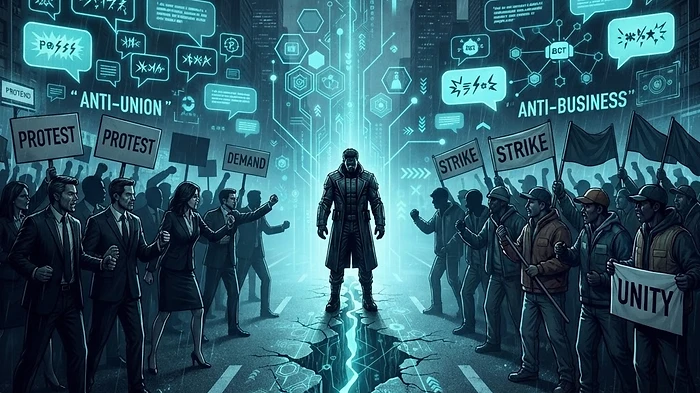
FIGCase illustration: The "Coalition Fracture" (Mayor) — Hypothetical Scenario.— Illustrative concept, not an actual system.
WHO REPORTED IT
Hypothetical adversary model (analytical construct, not a documented case).
DATE
Hypothetical
WHAT WAS OBSERVED
Target profile: Mayor of a major city facing a housing crisis, reliant on a fragile coalition of Business Owners and Labor Unions. The scenario posits a four-stage pressure sequence: Segment, Seed (Business), Seed (Labor), Amplify.
ROLE OF AI
AI-assisted grievance segmentation of coalition factions; synthetic quote fabrication; coordinated bot amplification across community forums.
TARGET OR AUDIENCE
A coalition structure supporting a single executive (the Mayor).
TECHNOLOGIES INVOLVED
Selective leaking of fabricated aide/planner quotes, parallel seeding into factional communities, bot-network amplification, isolation of the executive.
WHAT WAS ACTUALLY DEMONSTRATED
Illustrates how personalized cognitive pressure can target a structural power dynamic (coalition fragility) rather than an individual belief, fracturing support to force a vague compromise. Maps to the "structural power dynamics" stage of the PCP threat model.
WHAT WAS NOT DEMONSTRATED
This is a hypothetical construct. No public record documents this exact operation, its execution, or its outcome. It is included to model the mechanism, not to allege conduct.
KNOWN IMPACT
Hypothetical outcome: both factions lobby aggressively; the Mayor, isolated, agrees to a vague zoning compromise benefiting neither; the operator's client (a real-estate developer) benefits from the ambiguous rules. Stated as the modeled result, not an observed one.
The "Technologist's Fear" (CEO) — Hypothetical Scenario
A threat-model scenario illustrating how a cognitive-pressure operation could exploit a target's fear of disruption and obsolescence to coerce a fire-sale of a core asset. Presented for defensive analysis only; no such operation is documented here.
FIGCase illustration: The "Technologist's Fear" (CEO) — Hypothetical Scenario.— Illustrative concept, not an actual system.
WHO REPORTED IT
Hypothetical adversary model (analytical construct, not a documented case).
DATE
Hypothetical
WHAT WAS OBSERVED
Target profile: CEO of a legacy software giant, obsessed with "disruption" and fearing obsolescence. The scenario posits a four-stage pressure sequence: Fabricate, Validate, Pressure, Trap.
ROLE OF AI
AI-assisted fabrication of a viral tech-blog persona and "breakthrough" claim; coordinated validation through mid-tier journalists; doctored internal-email synthesis.
TARGET OR AUDIENCE
A single executive whose fear of a disruptive rival overrides due diligence.
Illustrates how personalized cognitive pressure can weaponize a professional identity anchor (the "disruptor" self-image and fear of obsolescence) to short-circuit verification and force a self-harming sale. Maps to the "emotional anchor exploitation" and "information architecture" stages of the PCP threat model.
WHAT WAS NOT DEMONSTRATED
This is a hypothetical construct. No public record documents this exact operation, its execution, or its outcome. It is included to model the mechanism, not to allege conduct.
KNOWN IMPACT
Hypothetical outcome: the CEO sells the core division to the rival cheaply to "bring them in-house"; the fake startup dissolves. Stated as the modeled result, not an observed one.
The "Recursive Feedback" (Diplomat) — Hypothetical Scenario
A threat-model scenario illustrating how a cognitive-pressure operation could exploit a target's fear of future blame to lock in a vague clause, then use post-hoc framing to entrench the behavior. Presented for defensive analysis only; no such operation is documented here.
FIGCase illustration: The "Recursive Feedback" (Diplomat) — Hypothetical Scenario.— Illustrative concept, not an actual system.
WHO REPORTED IT
Hypothetical adversary model (analytical construct, not a documented case).
DATE
Hypothetical
WHAT WAS OBSERVED
Target profile: a senior trade negotiator, legalistic, fearing blame for future loopholes. The scenario posits a five-stage pressure sequence: Confuse, Intimidate, Frame, Recursion, Lock-in.
ROLE OF AI
AI-assisted generation of multiple conflicting legal opinions; synthetic "peer-nation" signaling; post-hoc narrative reframing of the target's own decision to entrench the behavior.
TARGET OR AUDIENCE
A single negotiator whose procedural caution can be weaponized against specificity.
Illustrates how personalized cognitive pressure can exploit a procedural-identity anchor (fear of being blamed for loopholes) to induce vagueness, then use recursive feedback to lock the behavior in for future rounds. Maps to the "recursive feedback" and "information architecture" stages of the PCP threat model.
WHAT WAS NOT DEMONSTRATED
This is a hypothetical construct. No public record documents this exact operation, its execution, or its outcome. It is included to model the mechanism, not to allege conduct.
KNOWN IMPACT
Hypothetical outcome: the diplomat signs the vague clause; a later analysis frames the signing as "strength"; the operator interprets the ambiguity in their client's favor years later. Stated as the modeled result, not an observed one.
The "Second-Order Actor" (CFO) — Hypothetical Scenario
A threat-model scenario illustrating how a cognitive-pressure operation can bypass a hardened primary target by exploiting a trusted intermediary's vanity. Presented for defensive analysis only; no such operation is documented here.
FIGCase illustration: The "Second-Order Actor" (CFO) — Hypothetical Scenario.— Illustrative concept, not an actual system.
WHO REPORTED IT
Hypothetical adversary model (analytical construct, not a documented case).
DATE
Hypothetical
WHAT WAS OBSERVED
Target profile: CFO of a pharmaceutical corporation; the primary attack surface is the CFO's ambitious Chief of Staff (CoS), whose vanity metric is "Process Optimization." The scenario posits a four-stage pressure sequence: Profile, Seed, Nudge, Execute.
ROLE OF AI
AI-assisted profiling of the intermediary's career vanity metrics; synthetic white-paper generation tuned to the intermediary's identity anchor.
TARGET OR AUDIENCE
A trusted intermediary (the CoS) who carries the operation to the hardened primary (the CFO).
TECHNOLOGIES INVOLVED
Vanity-metric profiling, tailored white-paper seeding, intermediary-led internal advocacy, trust-transfer from CoS to CFO.
WHAT WAS ACTUALLY DEMONSTRATED
Illustrates how personalized cognitive pressure can exploit a second-order actor's professional vanity to reach a primary target who would reject a direct approach. Maps to the "second-order actor" and "emotional anchor exploitation" stages of the PCP threat model.
WHAT WAS NOT DEMONSTRATED
This is a hypothetical construct. No public record documents this exact operation, its execution, or its outcome. It is included to model the mechanism, not to allege conduct.
KNOWN IMPACT
Hypothetical outcome: the CFO adopts "Agile Compliance" on the CoS's recommendation; the drug is approved faster; the operator's biotech partner benefits from early market entry. Stated as the modeled result, not an observed one.
The "Halo/Horn Reversal" (Media Figure) — Hypothetical Scenario
A threat-model scenario illustrating how a cognitive-pressure operation can weaponize a reputation anchor (ethical sourcing) to invert a journalist's credibility. Presented for defensive analysis only; no such operation is documented here.
FIGCase illustration: The "Halo/Horn Reversal" (Media Figure) — Hypothetical Scenario.— Illustrative concept, not an actual system.
WHO REPORTED IT
Hypothetical adversary model (analytical construct, not a documented case).
DATE
Hypothetical
WHAT WAS OBSERVED
Target profile: an influential tech journalist known for "ethical sourcing." The scenario posits a four-stage pressure sequence: Halo, Horn, Dissonance, Result.
ROLE OF AI
AI-assisted amplification of prior praise content; synthetic screenshot fabrication tuned to the journalist's reputation anchor.
TARGET OR AUDIENCE
A media figure whose credibility rests on a single virtue anchor (ethical sourcing).
Illustrates how personalized cognitive pressure can exploit a reputation anchor to invert a halo into a horn, eroding the impact of a journalist's coverage. Maps to the "reputation anchor exploitation" and "dissonance induction" stages of the PCP threat model.
WHAT WAS NOT DEMONSTRATED
This is a hypothetical construct. No public record documents this exact operation, its execution, or its outcome. It is included to model the mechanism, not to allege conduct.
KNOWN IMPACT
Hypothetical outcome: readers doubt the journalist's neutrality, especially on the rival company's coverage; the rival's negative coverage loses impact. Stated as the modeled result, not an observed one.
The "Information Overload Wall" (Investment Banker) — Hypothetical Scenario
A threat-model scenario illustrating how a cognitive-pressure operation can weaponize information volume and minor discrepancies to induce analysis paralysis under a deadline. Presented for defensive analysis only; no such operation is documented here.
FIGCase illustration: The "Information Overload Wall" (Investment Banker) — Hypothetical Scenario.— Illustrative concept, not an actual system.
WHO REPORTED IT
Hypothetical adversary model (analytical construct, not a documented case).
DATE
Hypothetical
WHAT WAS OBSERVED
Target profile: Head of Mergers & Acquisitions at an investment bank, with high cognitive-load tolerance but limited bandwidth before a bid deadline. The scenario posits a four-stage pressure sequence: Flood, Conflict, Paralysis, Timeout.
ROLE OF AI
AI-assisted generation of many credible-sounding financial reports with minor, non-fatal discrepancies tuned to the target's analytical workflow.
TARGET OR AUDIENCE
A decision-maker whose bottleneck is reconciliation bandwidth under time pressure.
Illustrates how personalized cognitive pressure can exploit bandwidth limits to stall a time-bound decision. Maps to the "information overload" and "decision-deadline exploitation" stages of the PCP threat model.
WHAT WAS NOT DEMONSTRATED
This is a hypothetical construct. No public record documents this exact operation, its execution, or its outcome. It is included to model the mechanism, not to allege conduct.
KNOWN IMPACT
Hypothetical outcome: the banker's team spends days reconciling conflicting data; by the time they reach a conclusion, the bid window closes or the price has shifted, and the takeover is delayed or abandoned. Stated as the modeled result, not an observed one.
The "Strategic Omission" (Energy Minister) — Hypothetical Scenario
A threat-model scenario illustrating how a cognitive-pressure operation can weaponize a target's expectation of transparency by seeding an incomplete positive narrative that triggers scrutiny in a chosen direction. Presented for defensive analysis only; no such operation is documented here.
FIGCase illustration: The "Strategic Omission" (Energy Minister) — Hypothetical Scenario.— Illustrative concept, not an actual system.
WHO REPORTED IT
Hypothetical adversary model (analytical construct, not a documented case).
DATE
Hypothetical
WHAT WAS OBSERVED
Target profile: a detail-oriented Minister of Energy who expects transparency. The scenario posits a four-stage pressure sequence: Narrative, Omit, Trigger, Result.
ROLE OF AI
AI-assisted generation of a coherent positive-article series with a deliberately omitted material fact tuned to the target's transparency expectation.
TARGET OR AUDIENCE
A public official whose scrutiny can be redirected by an incomplete-but-credible narrative.
Illustrates how personalized cognitive pressure can exploit a detail-oriented mindset to redirect investigative bandwidth toward a chosen rival. Maps to the "strategic omission" and "scrutiny redirection" stages of the PCP threat model.
WHAT WAS NOT DEMONSTRATED
This is a hypothetical construct. No public record documents this exact operation, its execution, or its outcome. It is included to model the mechanism, not to allege conduct.
KNOWN IMPACT
Hypothetical outcome: the Minister's team spends three months investigating the rival oil company over the omitted input, distracting from other policy goals; the rival survives scrutiny and the operator's client gains time. Stated as the modeled result, not an observed one.
The "Role Conflict" (University President) — Hypothetical Scenario
A threat-model scenario illustrating how a cognitive-pressure operation can exploit a role conflict between two legitimate duties (academic excellence vs. financial sustainability) to force a desired decision. Presented for defensive analysis only; no such operation is documented here.
FIGCase illustration: The "Role Conflict" (University President) — Hypothetical Scenario.— Illustrative concept, not an actual system.
WHO REPORTED IT
Hypothetical adversary model (analytical construct, not a documented case).
DATE
Hypothetical
WHAT WAS OBSERVED
Target profile: president of a prestigious university who balances "Academic Excellence" against "Financial Sustainability." The scenario posits a four-stage pressure sequence: Frame, Conflict, Isolate, Trap.
ROLE OF AI
AI-assisted fabrication of peer-institution retention data; synthetic student-leader advocacy tuned to the president's role conflict.
TARGET OR AUDIENCE
A leader whose two legitimate duties can be pitted against each other.
Illustrates how personalized cognitive pressure can exploit a role conflict to force a decision while shifting blame to "market forces." Maps to the "role conflict exploitation" and "blame-shift trapping" stages of the PCP threat model.
WHAT WAS NOT DEMONSTRATED
This is a hypothetical construct. No public record documents this exact operation, its execution, or its outcome. It is included to model the mechanism, not to allege conduct.
KNOWN IMPACT
Hypothetical outcome: the president raises tuition to satisfy faculty and student-leader demands, blaming market forces; the operator (a textbook publisher) benefits from higher enrollment. Stated as the modeled result, not an observed one.
The "Circadian Disruption" (Negotiator) — Hypothetical Scenario
A threat-model scenario illustrating how a cognitive-pressure operation can exploit circadian vulnerability and time-zone asymmetry to force a compromised stance before a negotiation. Presented for defensive analysis only; no such operation is documented here.
FIGCase illustration: The "Circadian Disruption" (Negotiator) — Hypothetical Scenario.— Illustrative concept, not an actual system.
WHO REPORTED IT
Hypothetical adversary model (analytical construct, not a documented case).
DATE
Hypothetical
WHAT WAS OBSERVED
Target profile: chief negotiator for a trade deal, working in a different time zone and sleeping lightly. The scenario posits a four-stage pressure sequence: Timing, Content, Impact, Result.
ROLE OF AI
AI-assisted timing of a "critical leak" at the negotiator's circadian nadir; synthetic content suggesting a rival is finalizing a better deal.
TARGET OR AUDIENCE
A negotiator whose judgment degrades under sleep disruption and time pressure.
Illustrates how personalized cognitive pressure can exploit sleep-cycle vulnerability to capture a decision before the target re-equilibrates. Maps to the "circadian disruption" and "pre-meeting stance capture" stages of the PCP threat model.
WHAT WAS NOT DEMONSTRATED
This is a hypothetical construct. No public record documents this exact operation, its execution, or its outcome. It is included to model the mechanism, not to allege conduct.
KNOWN IMPACT
Hypothetical outcome: the negotiator wakes, panics, and prepares a compromise stance before the meeting, agreeing to lower tariffs to "stop the rival"; the operator's export business benefits. Stated as the modeled result, not an observed one.
The "Social Proof" (Investor) — Hypothetical Scenario
A threat-model scenario illustrating how a cognitive-pressure operation can exploit herd mentality and FOMO to override due diligence. Presented for defensive analysis only; no such operation is documented here.
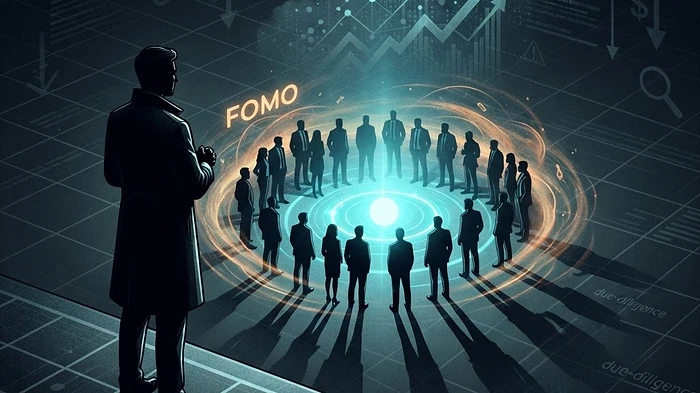
FIGCase illustration: The "Social Proof" (Investor) — Hypothetical Scenario.— Illustrative concept, not an actual system.
WHO REPORTED IT
Hypothetical adversary model (analytical construct, not a documented case).
DATE
Hypothetical
WHAT WAS OBSERVED
Target profile: a venture capital partner with herd mentality and fear of missing out. The scenario posits a three-stage pressure sequence: Proxy, Amplify, Result.
ROLE OF AI
AI-assisted amplification of "Top VCs Are Flocking" narratives; subtle pressure applied to proxy VCs to circle the startup.
TARGET OR AUDIENCE
An investor whose decision can be captured by perceived consensus rather than independent analysis.
Illustrates how personalized cognitive pressure can exploit herd mentality to suppress due-diligence signals. Maps to the "social proof" and "FOMO-induced diligence override" stages of the PCP threat model.
WHAT WAS NOT DEMONSTRATED
This is a hypothetical construct. No public record documents this exact operation, its execution, or its outcome. It is included to model the mechanism, not to allege conduct.
KNOWN IMPACT
Hypothetical outcome: the target VC invests to avoid FOMO despite due-diligence flags; the startup is funded and the operator exits later with profits. Stated as the modeled result, not an observed one.
The "Accountability Gap" (City Council Member) — Hypothetical Scenario
A threat-model scenario illustrating how a cognitive-pressure operation can exploit fear of personal blame to pass a vague budget that obscures liability. Presented for defensive analysis only; no such operation is documented here.
FIGCase illustration: The "Accountability Gap" (City Council Member) — Hypothetical Scenario.— Illustrative concept, not an actual system.
WHO REPORTED IT
Hypothetical adversary model (analytical construct, not a documented case).
DATE
Hypothetical
WHAT WAS OBSERVED
Target profile: a city council member responsible for the transit budget who fears personal blame for future failures. The scenario posits a three-stage pressure sequence: Blame Past, Hedge, Protect.
ROLE OF AI
AI-assisted drafting of vague liability-shifting language; narrative framing that attributes the deficit to the previous council.
TARGET OR AUDIENCE
An official whose blame-aversion can be exploited to obscure accountability.
Illustrates how personalized cognitive pressure can exploit blame-aversion to pass a budget that hides deficits behind external-factor language. Maps to the "accountability gap" and "liability obscuration" stages of the PCP threat model.
WHAT WAS NOT DEMONSTRATED
This is a hypothetical construct. No public record documents this exact operation, its execution, or its outcome. It is included to model the mechanism, not to allege conduct.
KNOWN IMPACT
Hypothetical outcome: the budget passes; when deficits hit later, they are blamed on "the economy" rather than the council member; the operator's contractor gets the funding while liabilities are obscured. Stated as the modeled result, not an observed one.
The "Flow State Interruption" (Researcher) — Hypothetical Scenario
A threat-model scenario illustrating how a cognitive-pressure operation can exploit deep-work vulnerability to delay a time-sensitive publication. Presented for defensive analysis only; no such operation is documented here.
FIGCase illustration: The "Flow State Interruption" (Researcher) — Hypothetical Scenario.— Illustrative concept, not an actual system.
WHO REPORTED IT
Hypothetical adversary model (analytical construct, not a documented case).
DATE
Hypothetical
WHAT WAS OBSERVED
Target profile: a lead scientist on a vaccine trial who is prone to frustration when interrupted during deep work. The scenario posits a three-stage pressure sequence: Monitor, Interrupt, Result.
ROLE OF AI
AI-assisted detection of deep-work windows via digital activity signals; synthetic "media inquiry" or "internal dispute" triggers timed to the flow window.
TARGET OR AUDIENCE
A researcher whose publication timeline can be shifted by breaking deep-work focus.
Illustrates how personalized cognitive pressure can exploit flow-state vulnerability to delay a competitive publication. Maps to the "flow state interruption" and "focus-break delay" stages of the PCP threat model.
WHAT WAS NOT DEMONSTRATED
This is a hypothetical construct. No public record documents this exact operation, its execution, or its outcome. It is included to model the mechanism, not to allege conduct.
KNOWN IMPACT
Hypothetical outcome: the scientist's focus breaks, they spend days managing the crisis, publication is delayed, and the competitor vaccine is published first. Stated as the modeled result, not an observed one.
The "Identity Anchoring" (Religious Leader) — Hypothetical Scenario
A threat-model scenario illustrating how a cognitive-pressure operation can exploit an identity anchor (stewardship, care for the poor) to secure an endorsement for an unrelated fiscal policy. Presented for defensive analysis only; no such operation is documented here.
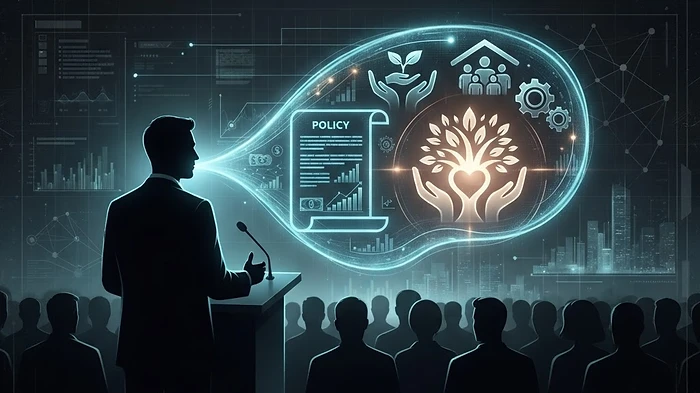
FIGCase illustration: The "Identity Anchoring" (Religious Leader) — Hypothetical Scenario.— Illustrative concept, not an actual system.
WHO REPORTED IT
Hypothetical adversary model (analytical construct, not a documented case).
DATE
Hypothetical
WHAT WAS OBSERVED
Target profile: a prominent community leader whose identity is tied to "stewardship" and "care for the poor." The scenario posits a three-stage pressure sequence: Frame, Script, Result.
ROLE OF AI
AI-assisted reframing of a fiscal policy as community-care language; provision of a sermon outline linking the policy to stewardship principles.
TARGET OR AUDIENCE
A leader whose endorsement can be captured by aligning a policy with their core identity anchor.
Illustrates how personalized cognitive pressure can exploit an identity anchor to secure an endorsement the target believes aligns with their core values. Maps to the "identity anchoring" and "identity-congruent endorsement" stages of the PCP threat model.
WHAT WAS NOT DEMONSTRATED
This is a hypothetical construct. No public record documents this exact operation, its execution, or its outcome. It is included to model the mechanism, not to allege conduct.
KNOWN IMPACT
Hypothetical outcome: the leader endorses the policy believing it aligns with their core identity; voters support the policy; the operator's business benefits from tax cuts. Stated as the modeled result, not an observed one.
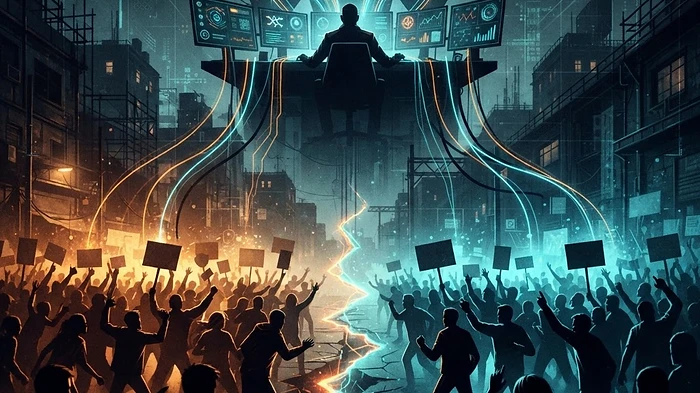
The "Polarization Amplifier" (Community) — Hypothetical Scenario
A threat-model scenario illustrating how a cognitive-pressure operation can amplify an existing community divide to manufacture internal chaos and block a development, without unified opposition ever forming. Presented for defensive analysis only; no such operation is documented here.
FIGCase illustration: The "Polarization Amplifier" (Community) — Hypothetical Scenario.— Illustrative concept, not an actual system.
WHO REPORTED IT
Hypothetical adversary model (analytical construct, not a documented case).
DATE
Hypothetical
WHAT WAS OBSERVED
Target profile: an urban neighborhood association divided between "Tradition" and "Progress." The scenario posits a four-stage pressure sequence: Segment, Feed (divergent), Conflict, Result.
ROLE OF AI
AI-assisted audience segmentation and divergent message generation tailored to each faction's identity anchor.
TARGET OR AUDIENCE
A divided community whose internal friction can be amplified into paralysis.
Illustrates how personalized cognitive pressure can exploit an existing fault line to produce blocking chaos rather than organized opposition. Maps to the "segmentation," "divergent framing," and "amplification" stages of the PCP threat model.
WHAT WAS NOT DEMONSTRATED
This is a hypothetical construct. No public record documents this exact operation, its execution, or its outcome. It is included to model the mechanism, not to allege conduct.
KNOWN IMPACT
Hypothetical outcome: the development is blocked due to internal chaos, and the operator's competing project is approved. Stated as the modeled result, not an observed one.
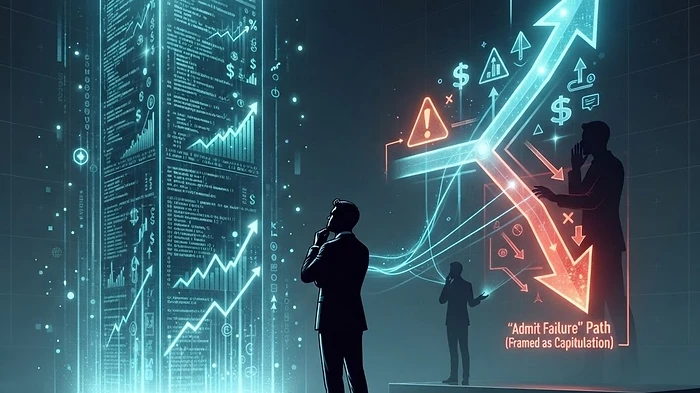
The "Sunk Cost Trap" (Project Manager) — Hypothetical Scenario
A threat-model scenario illustrating how a cognitive-pressure operation can exploit a decision-maker's aversion to admitting failure to keep a failing project alive. Presented for defensive analysis only; no such operation is documented here.
FIGCase illustration: The "Sunk Cost Trap" (Project Manager) — Hypothetical Scenario.— Illustrative concept, not an actual system.
WHO REPORTED IT
Hypothetical adversary model (analytical construct, not a documented case).
DATE
Hypothetical
WHAT WAS OBSERVED
Target profile: head of a failed IT project who hates admitting failure. The scenario posits a four-stage pressure sequence: Highlight Investment, False Choice, Frame, Result.
ROLE OF AI
AI-assisted framing of continuation as prudence and cancellation as capitulation, and construction of a narrow false-choice set.
TARGET OR AUDIENCE
A decision-maker whose identity is tied to the project's success and who is averse to admitting failure.
Illustrates how personalized cognitive pressure can exploit loss aversion and identity to drive escalation of commitment. Maps to the "false choice," "identity-congruent framing," and "escalation capture" stages of the PCP threat model.
WHAT WAS NOT DEMONSTRATED
This is a hypothetical construct. No public record documents this exact operation, its execution, or its outcome. It is included to model the mechanism, not to allege conduct.
KNOWN IMPACT
Hypothetical outcome: the project manager pushes for more funds to "finish the job"; more money is wasted and the operator (a consultancy) bills more hours. Stated as the modeled result, not an observed one.
The "Silent Majority" Illusion (Politician) — Hypothetical Scenario
A threat-model scenario illustrating how a cognitive-pressure operation can manufacture a false sense of momentum to induce complacency in an opposition leader. Presented for defensive analysis only; no such operation is documented here.
FIGCase illustration: The "Silent Majority" Illusion (Politician) — Hypothetical Scenario.— Illustrative concept, not an actual system.
WHO REPORTED IT
Hypothetical adversary model (analytical construct, not a documented case).
DATE
Hypothetical
WHAT WAS OBSERVED
Target profile: an opposition leader prone to overconfidence who ignores dissent. The scenario posits a four-stage pressure sequence: Fake Polls, Amplify, Complacency, Surprise.
ROLE OF AI
AI-assisted generation of slightly misleading polling narratives and bot-amplification of those narratives within the target's inner circles.
TARGET OR AUDIENCE
A decision-maker whose overconfidence and in-group information diet can be exploited to induce complacency.
Illustrates how personalized cognitive pressure can manufacture a false consensus to reduce an opponent's effort. Maps to the "false-consensus fabrication," "in-group amplification," and "complacency induction" stages of the PCP threat model.
WHAT WAS NOT DEMONSTRATED
This is a hypothetical construct. No public record documents this exact operation, its execution, or its outcome. It is included to model the mechanism, not to allege conduct.
KNOWN IMPACT
Hypothetical outcome: the leader relaxes campaign efforts and is shocked by the real results; the operator's candidate wins. Stated as the modeled result, not an observed one.
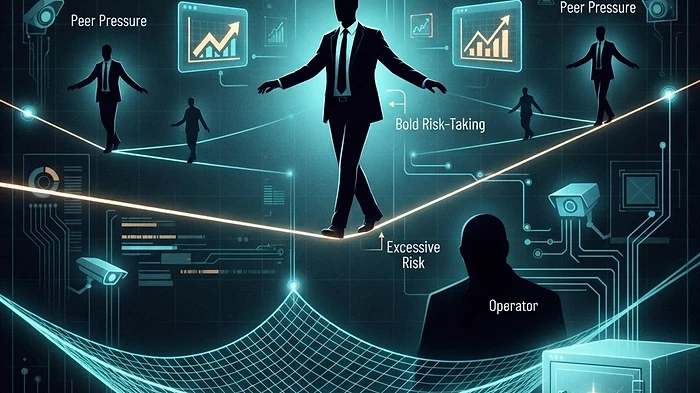
The "Moral Hazard" (Banker) — Hypothetical Scenario
A threat-model scenario illustrating how a cognitive-pressure operation can normalize excessive risk-taking by exploiting a reward structure biased toward short-term gains and an implied safety net. Presented for defensive analysis only; no such operation is documented here.
FIGCase illustration: The "Moral Hazard" (Banker) — Hypothetical Scenario.— Illustrative concept, not an actual system.
WHO REPORTED IT
Hypothetical adversary model (analytical construct, not a documented case).
DATE
Hypothetical
WHAT WAS OBSERVED
Target profile: a bank CEO whose reward structure favors short-term gains. The scenario posits a four-stage pressure sequence: Normalize, Peer Pressure, Safety Net, Result.
ROLE OF AI
AI-assisted generation of normalizing narratives ("smart banks take bold risks"), peer-comparison framing, and bailout-safety-net insinuation.
TARGET OR AUDIENCE
A decision-maker whose incentive structure rewards short-term upside while externalizing downside risk.
Illustrates how personalized cognitive pressure can exploit asymmetric incentives to induce excessive risk-taking. Maps to the "normalization," "peer-pressure framing," and "moral-hazard capture" stages of the PCP threat model.
WHAT WAS NOT DEMONSTRATED
This is a hypothetical construct. No public record documents this exact operation, its execution, or its outcome. It is included to model the mechanism, not to allege conduct.
KNOWN IMPACT
Hypothetical outcome: the CEO takes on high-risk loans for short-term profit; if it fails the operator (an insurance firm) profits, and if it succeeds they collect fees. Stated as the modeled result, not an observed one.
The "Narrative Control" (Journalist) — Hypothetical Scenario
A threat-model scenario illustrating how a cognitive-pressure operation can capture a senior editor's agenda by manufacturing a trend and supplying an "exclusive," positioning the editor as the voice of authority on a topic the operator controls. Presented for defensive analysis only; no such operation is documented here.
FIGCase illustration: The "Narrative Control" (Journalist) — Hypothetical Scenario.— Illustrative concept, not an actual system.
WHO REPORTED IT
Hypothetical adversary model (analytical construct, not a documented case).
DATE
Hypothetical
WHAT WAS OBSERVED
Target profile: a senior editor who wants to be seen as "forward-thinking." The scenario posits a four-stage pressure sequence: Trendsetting, Exclusive, Anchor, Control.
ROLE OF AI
AI-assisted trend manufacturing, "exclusive" data packaging, and framing that positions the editor as the authority on the operator's chosen topic.
TARGET OR AUDIENCE
A gatekeeper whose desire to be seen as forward-thinking can be exploited to capture future coverage.
Illustrates how personalized cognitive pressure can capture an editorial agenda by manufacturing a trend and anchoring authority. Maps to the "trendsetting," "authority anchoring," and "framing capture" stages of the PCP threat model.
WHAT WAS NOT DEMONSTRATED
This is a hypothetical construct. No public record documents this exact operation, its execution, or its outcome. It is included to model the mechanism, not to allege conduct.
KNOWN IMPACT
Hypothetical outcome: the editor publishes the story, becomes the voice of authority on the topic, and future coverage flows through the operator's framing; the operator shapes public opinion on the topic. Stated as the modeled result, not an observed one.
Documented cases are sourced and neutral. Hypothetical scenarios are analytical constructs presented to model adversary mechanics for defensive research; they do not allege any real operation, person, or outcome. This site does not editorialize about any political party, candidate, government, ideology or election.